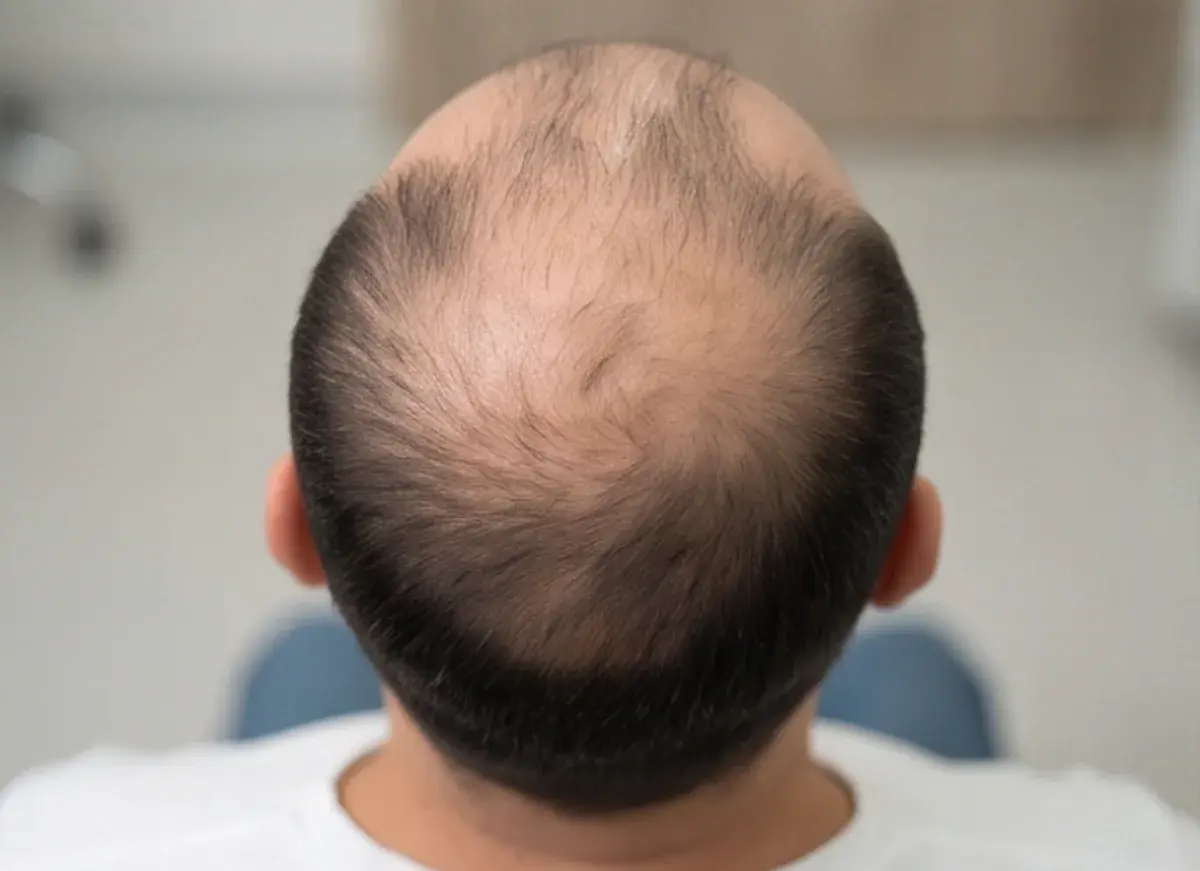


Why the crown is special
At the crown the hair grows in a spiral out of a swirl. For the result to look natural, each graft must follow this pattern – in direction and angle. The area is also larger than you think: because of the curve of the head, the crown often needs more grafts than the forehead for the same visual density.
How many grafts are needed?
Depending on the size of the thinning spot, the crown usually needs about 1,000 to 2,500 grafts. If receding temples or a thinning top come on top, the number rises accordingly. Because the donor area is limited, with advanced hair loss we usually plan the forehead and hairline first – they shape the face most.
Which method suits?
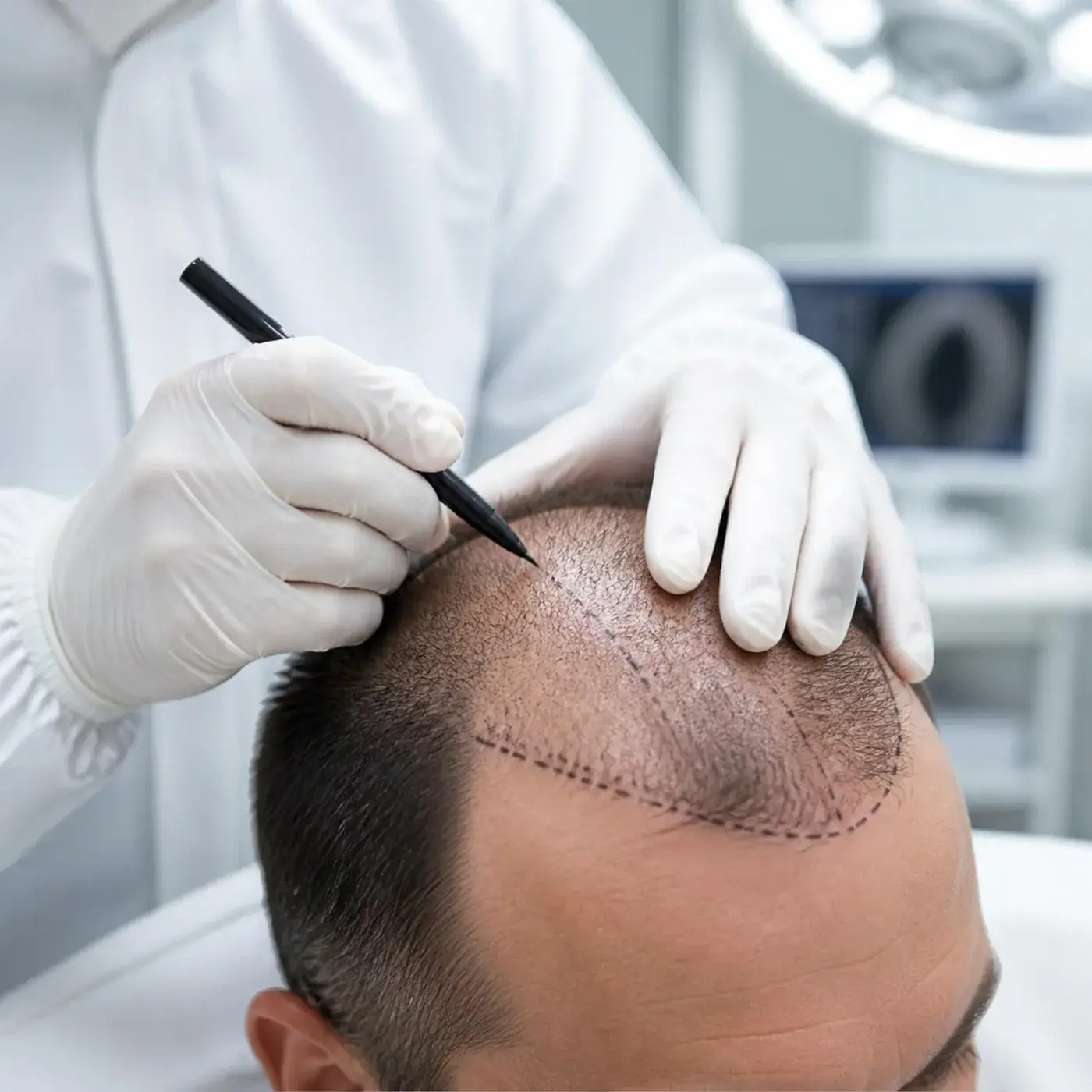
- FUE: good for larger areas at the crown and top.
- DHI: when hair is still present and should be densified between it.
- Often combined: FUE for the area, DHI for the transition.
- PRP can additionally strengthen existing hair at the crown.
Why the result takes longer there
At the crown the transplanted hair often grows more slowly than at the forehead. The final result there often shows only after twelve to eighteen months. Knowing this helps you stay calm when the forehead is already dense and the crown still needs some time.
The next step
In addition to the usual four photos, ideally send us one photo directly from above onto the crown. Our head surgeon assesses the area, the donor area and the further course and gives you graft count and fixed price.