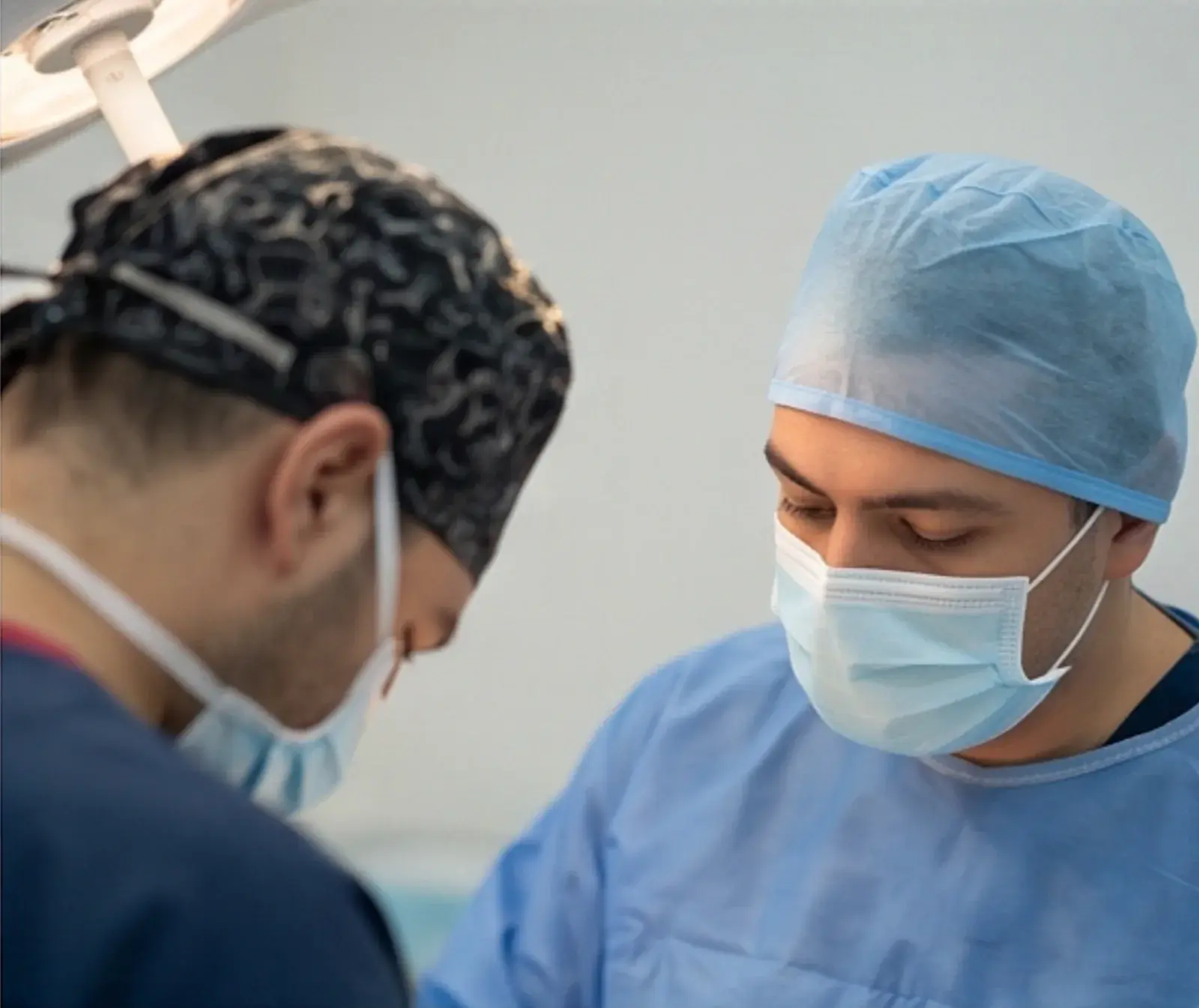
With DHI, every graft is placed directly into the scalp with a fine Choi Pen. The head surgeon sets the angle, depth and direction for each single hair – which is what makes a hairline look grown rather than transplanted.
Classic FUE opens channels first and inserts the grafts afterwards. DHI (Direct Hair Implantation) removes that step: the graft is already loaded in the needle of the Choi Pen and goes in with a single movement. Grafts spend less time outside the body, and the surgeon can work very closely between existing hair.
At the front, the direction of every hair decides whether a result looks natural. The Choi Pen holds an exit angle of roughly 40 to 45 degrees with precision, so the new hair falls the way your own hair always has.
On the day of the procedure
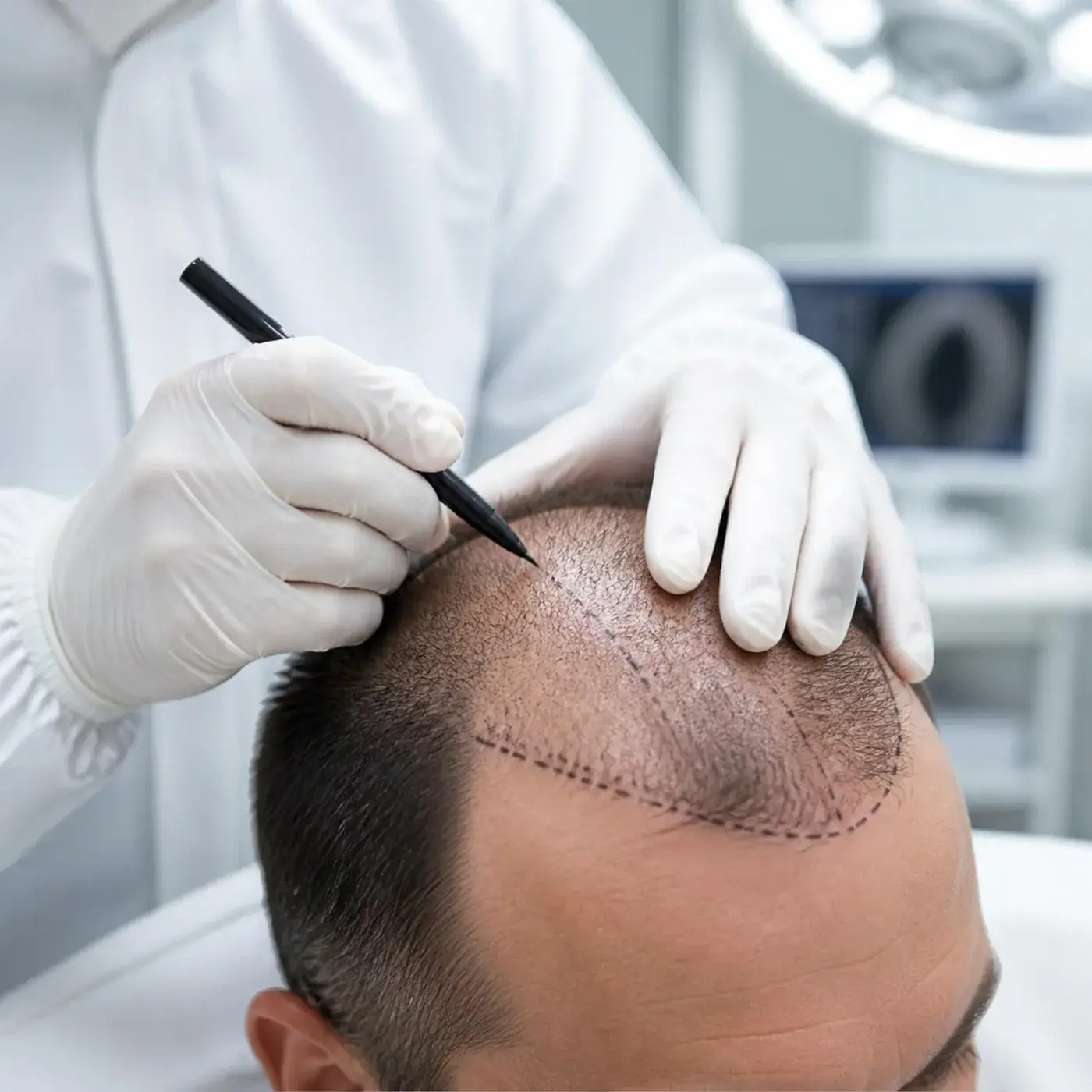
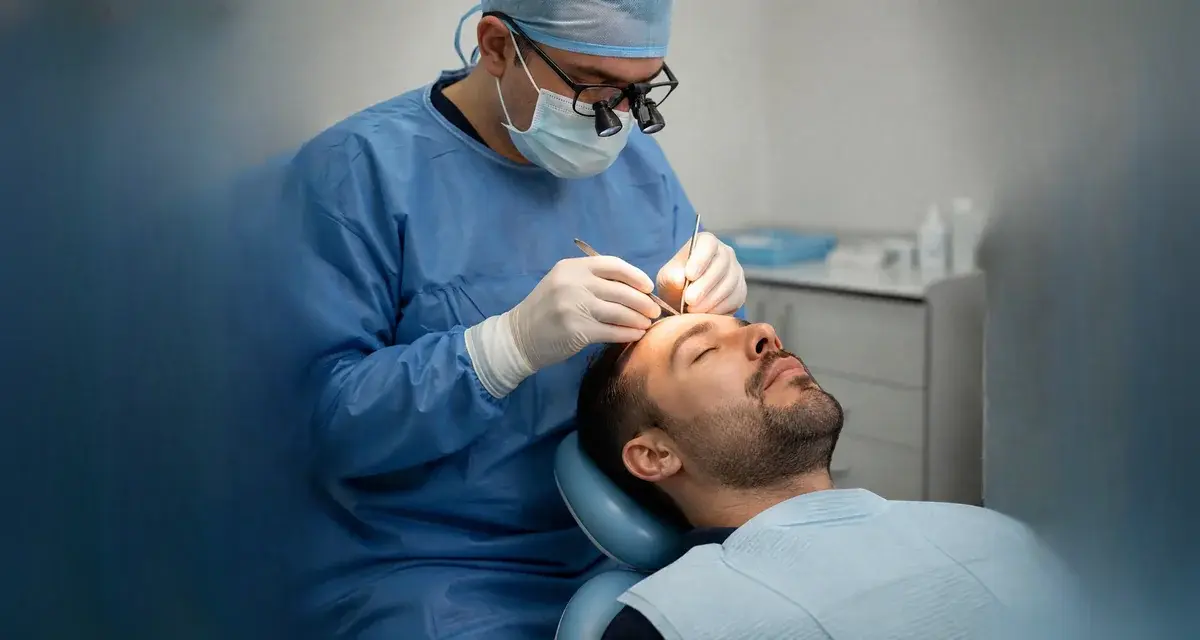
In the morning the head surgeon draws your new hairline with a skin marker together with you. You see it in the mirror and can ask for changes before a single needle is used. Then comes local anaesthesia, graft extraction from the back of the head and implantation.
Depending on graft count the procedure takes six to eight hours, with breaks and lunch. You stay awake and can listen to music or watch a film. A check-up follows the next day and the first hair wash at the clinic on day two.
What to expect afterwards
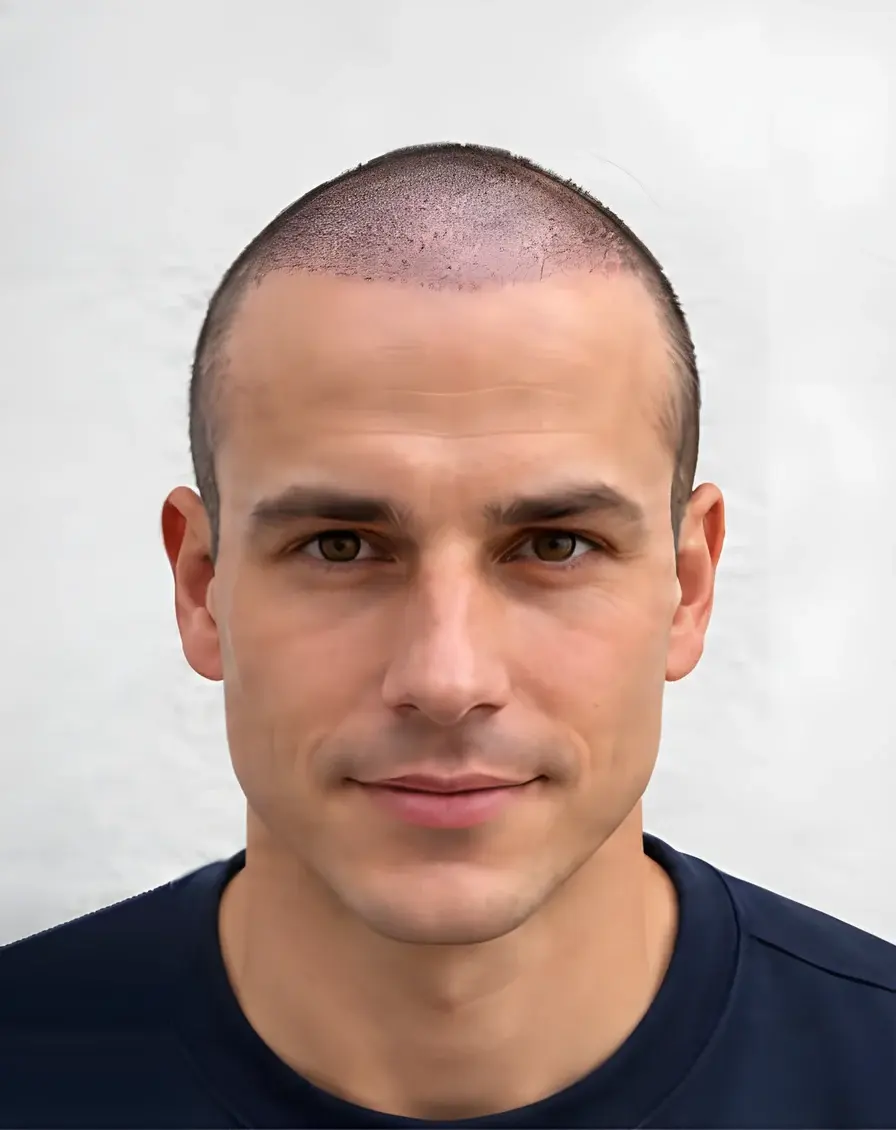
Small scabs form in the first ten days and come off with daily washing. Between week three and eight the transplanted shafts usually shed – this is normal, the root stays. New hair grows from month three or four, the result is largely visible after about twelve months, at the crown sometimes after 18.
Your stay
Day 1
Arrival
Airport pick-up and drive to the hotel. In the evening your coordinator calls to go through the next day.
Day 2
Analysis and procedure
First comes a trichoscopy to analyse your hair and scalp, plus a blood test and an ECG. Then your individual hairline is drawn.
This is followed by the extraction and implantation of the hair follicles. The procedure is carried out under sedation (“Sleep Deep”). Afterwards you receive a PRP treatment.
Day 3
Check-up, first hair wash and departure
The head surgeon personally checks your donor and recipient areas and carries out the first hair wash himself. This is also included in the package.
You then have your final consultation and receive all the medication and care products you need, with a detailed explanation of how to use them and of your aftercare.
From the afternoon, after the final check-up, you can travel home.
How the hair grows back
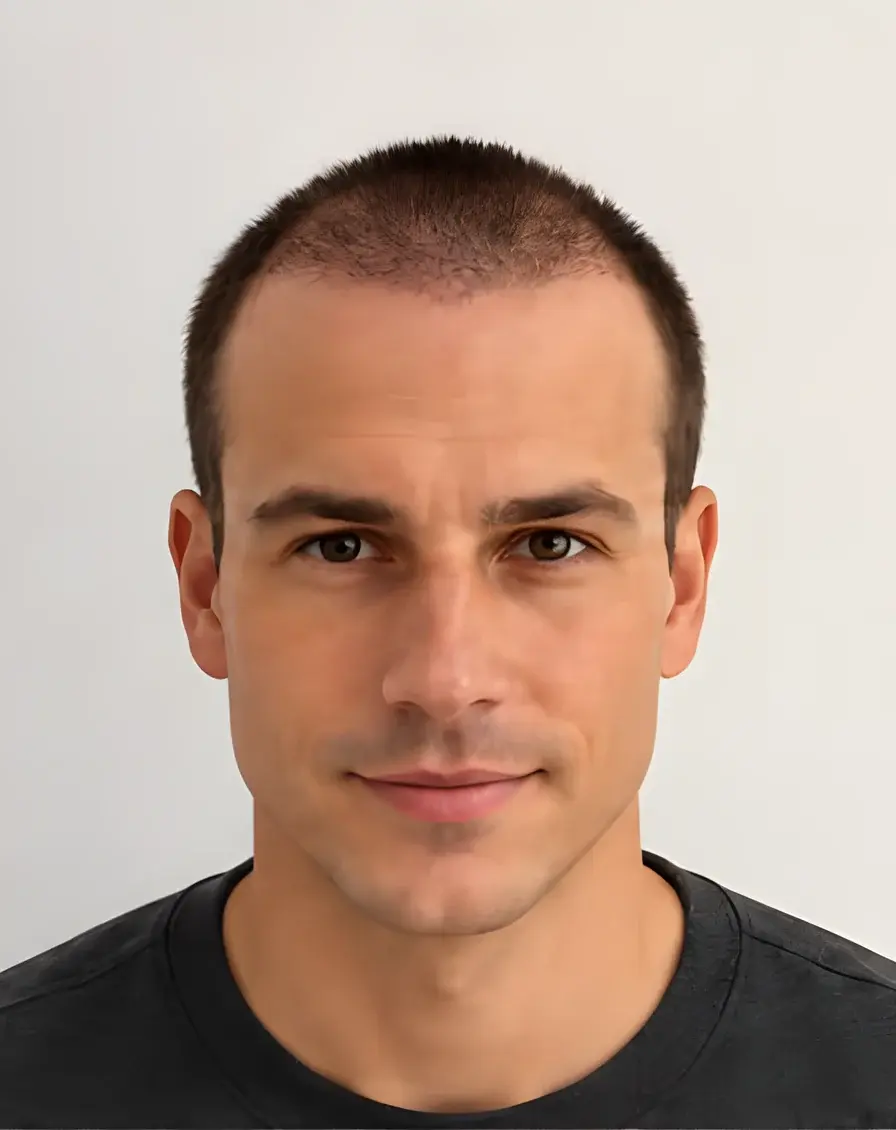
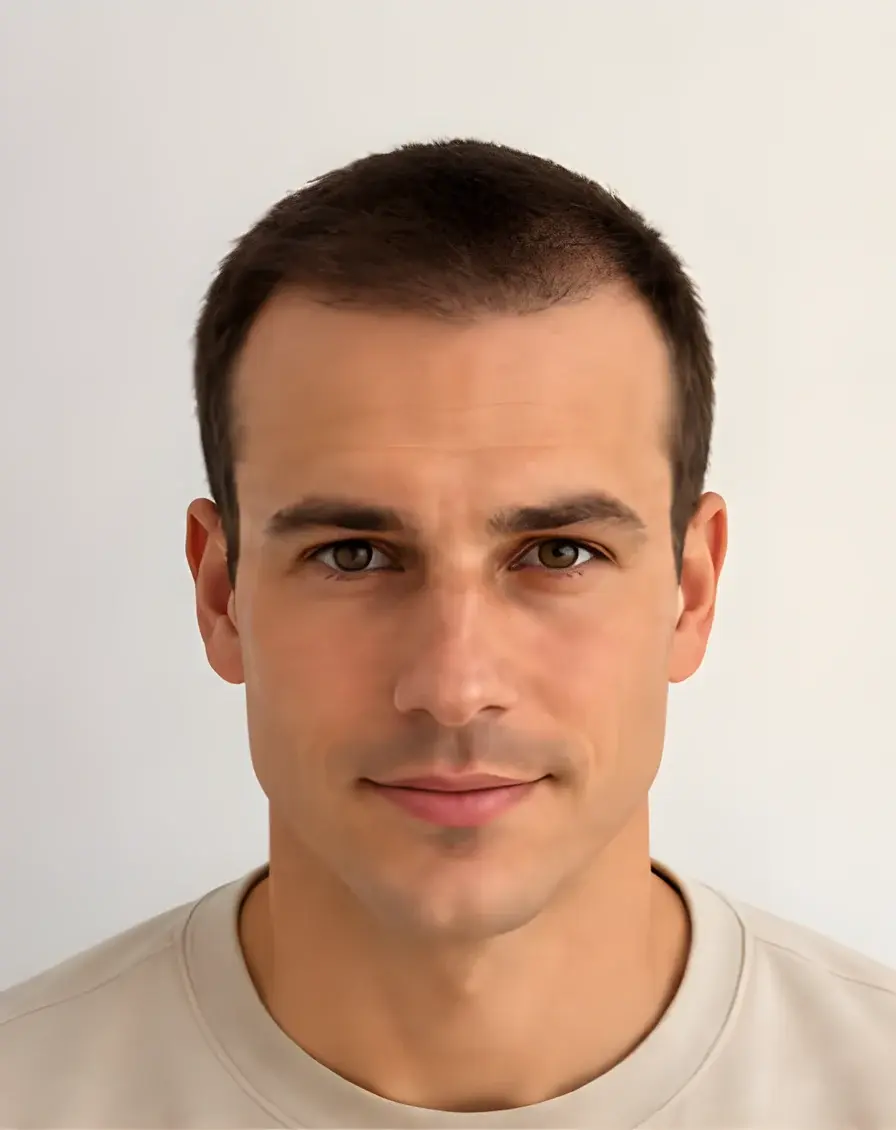
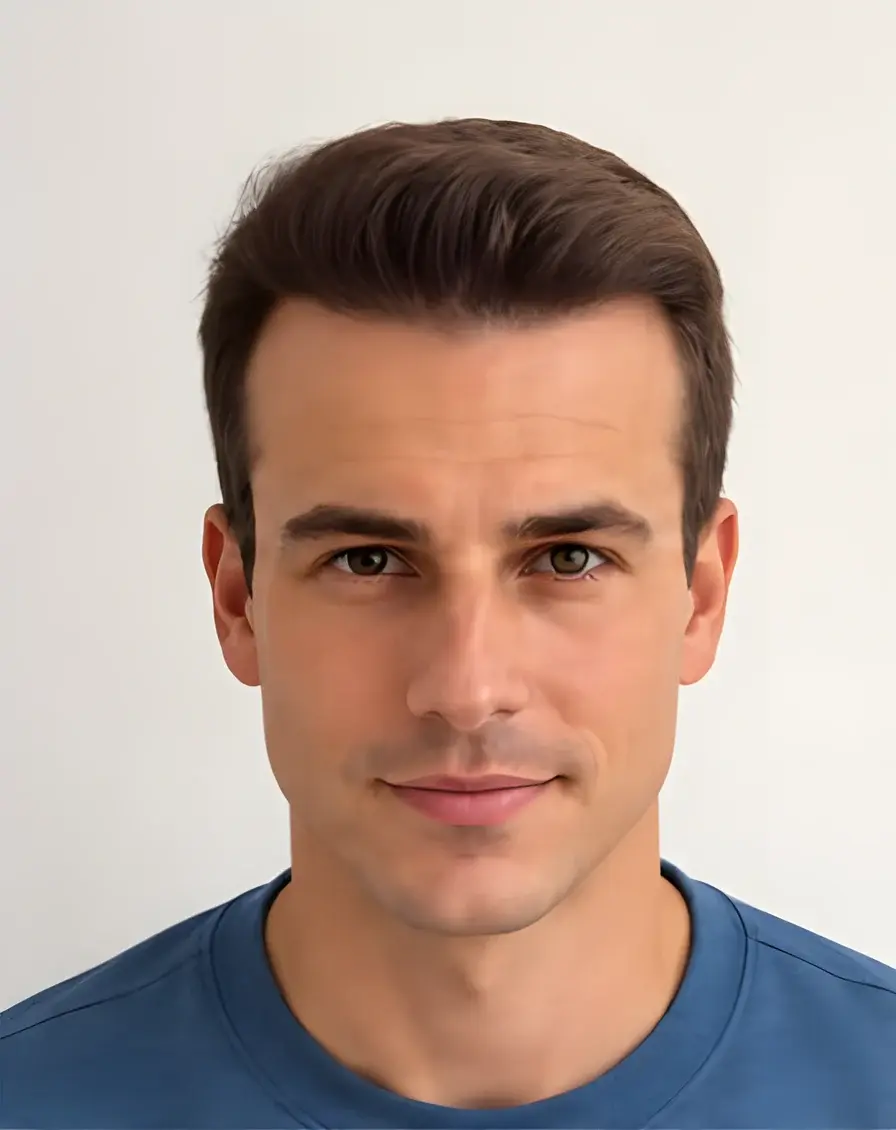
10 daysSmall scabs that come off with daily washing.
30 daysThe transplanted shafts shed; the roots stay.
90 daysNew, initially fine hair starts to grow.
180 daysClearly visible density; the hair gets stronger.
Questions about this treatment
Is DHI better than FUE?
Not across the board. DHI has the edge for hairlines and densifying; FUE can place more grafts in a single session on very large areas. The head surgeon decides which fits after analysing your photos.
Do I have to shave my head for DHI?
The donor area at the back is usually trimmed short. The recipient area can often stay unshaven with DHI. If nothing should be shaved at all, Long DHI is the right variant.
Does a DHI hair transplant hurt?
We want your hair transplant to be as comfortable as possible. That is why we combine local anaesthesia with individually adjusted sedation – which we call the “Sleep-Deep method”. The sedation helps you relax and experience the treatment more calmly. The local anaesthesia ensures that the treated area is free of pain.
Guide
Cost, methods, procedure and aftercare – the key questions before a hair transplant in Turkey.



 Hair transplant in Turkey: cost in 2026 Price range, comparison with Germany and Switzerland and what a package should include.
 How to recognise a reputable clinic in Turkey: 10 criteria Ten criteria, the right questions before booking and typical warning signs.