Most often we treat linear scars from the older strip method (FUT), scars after accidents or head surgery, and scars within the beard. Smaller burn scars can also be an option when the tissue is stable and mature.
The scar should be at least twelve months old and no longer red. Whether blood supply is sufficient is judged by our head surgeon on site – from photos we give you an honest first assessment beforehand.
Why sometimes two sessions
Because scar tissue has fewer blood vessels, our head surgeon deliberately places grafts more loosely in the first session. That improves the survival rate. If the result should be denser after about a year, a second, smaller session follows. PRP before and after the procedure can additionally support blood flow.
Your stay
Day 1
Arrival
Airport pick-up and drive to the hotel. In the evening your coordinator calls to go through the next day.
Day 2
Analysis and procedure
First comes a trichoscopy to analyse your hair and scalp, plus a blood test and an ECG. Then your individual hairline is drawn.
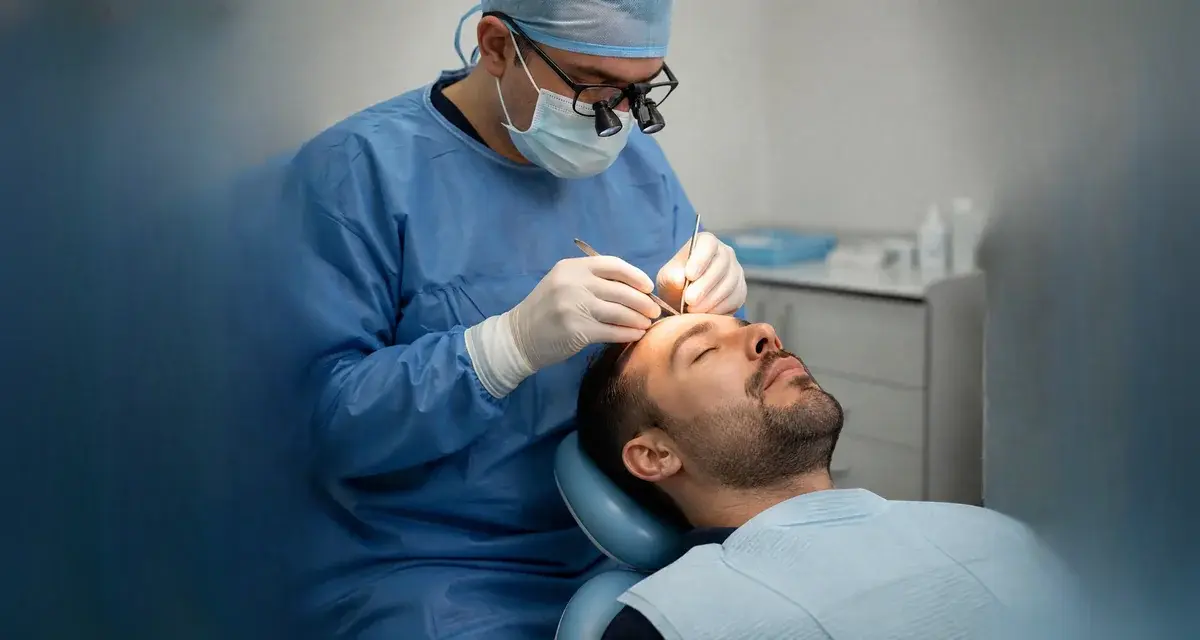
This is followed by the extraction and implantation of the hair follicles. The procedure is carried out under sedation (“Sleep Deep”). Afterwards you receive a PRP treatment.
Day 3
Check-up, first hair wash and departure
The head surgeon personally checks your donor and recipient areas and carries out the first hair wash himself. This is also included in the package.
You then have your final consultation and receive all the medication and care products you need, with a detailed explanation of how to use them and of your aftercare.
From the afternoon, after the final check-up, you can travel home.
How the hair grows back
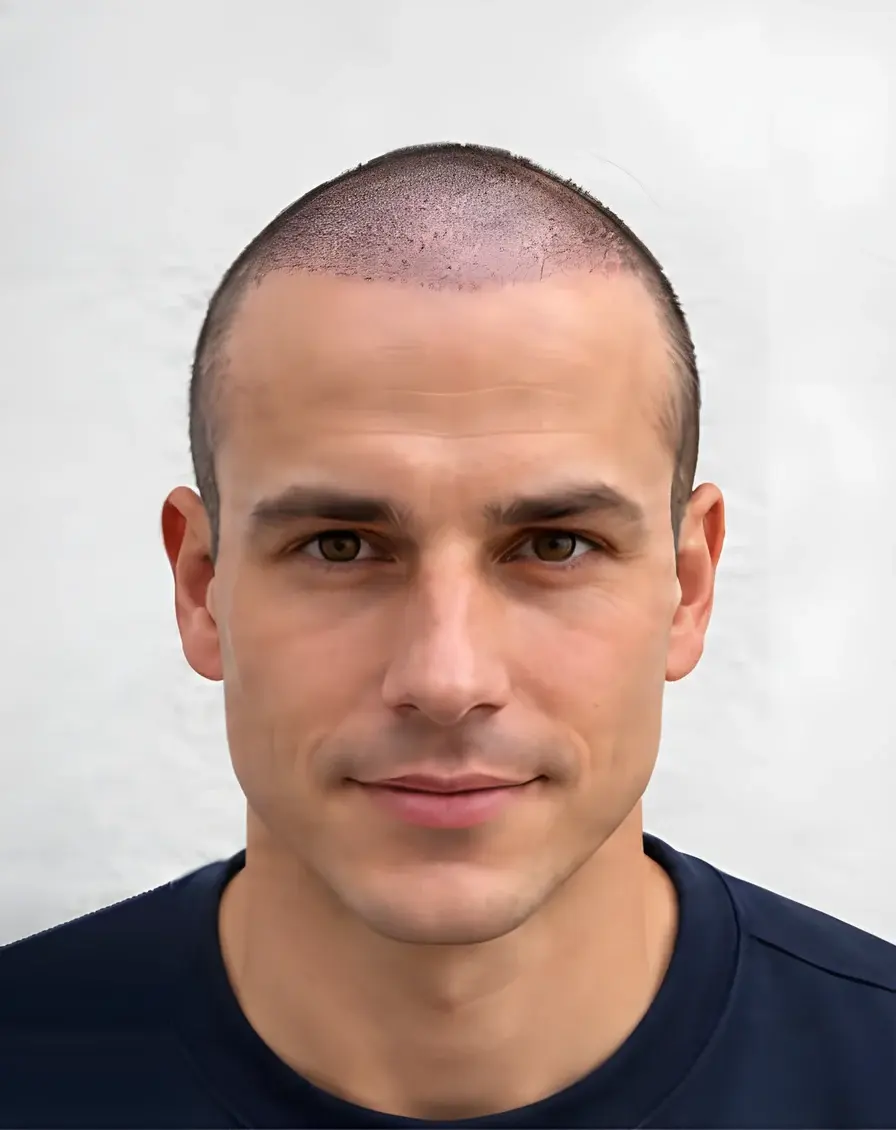
10 daysSmall scabs that come off with daily washing.
30 daysThe transplanted shafts shed; the roots stay.
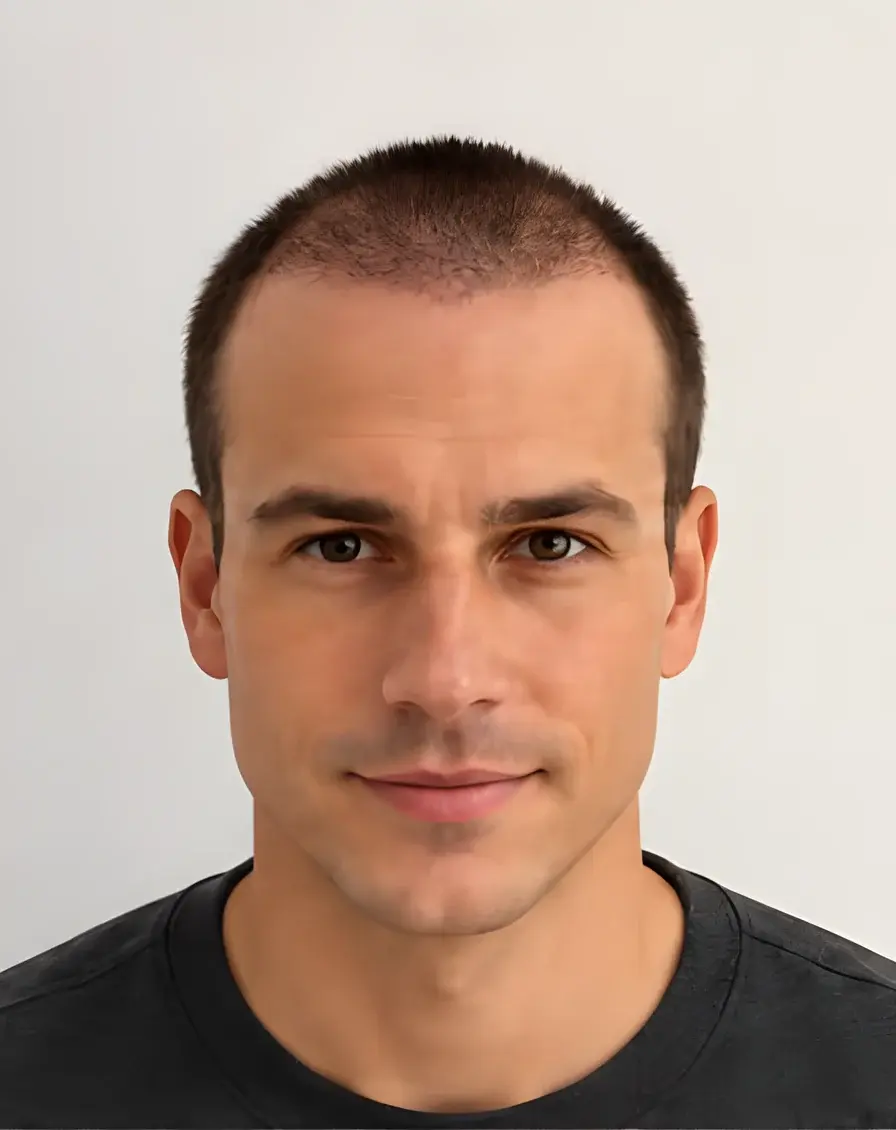
90 daysNew, initially fine hair starts to grow.
180 daysClearly visible density; the hair gets stronger.
Questions about this treatment
Does hair really grow in a scar?
Yes, transplanted hair grows in mature scar tissue, though survival is slightly lower than in healthy skin. That is why we plan more loosely and, if needed, in two steps.
How old does the scar need to be?
At least twelve months. The tissue should no longer be red or sensitive.
Can a FUT scar be fully covered?
In most cases it becomes dense enough not to stand out at a normal hair length. With very short haircuts it may still be visible depending on its width.
Guide
Cost, methods, procedure and aftercare – the key questions before a hair transplant in Turkey.