
Why the hairline recedes
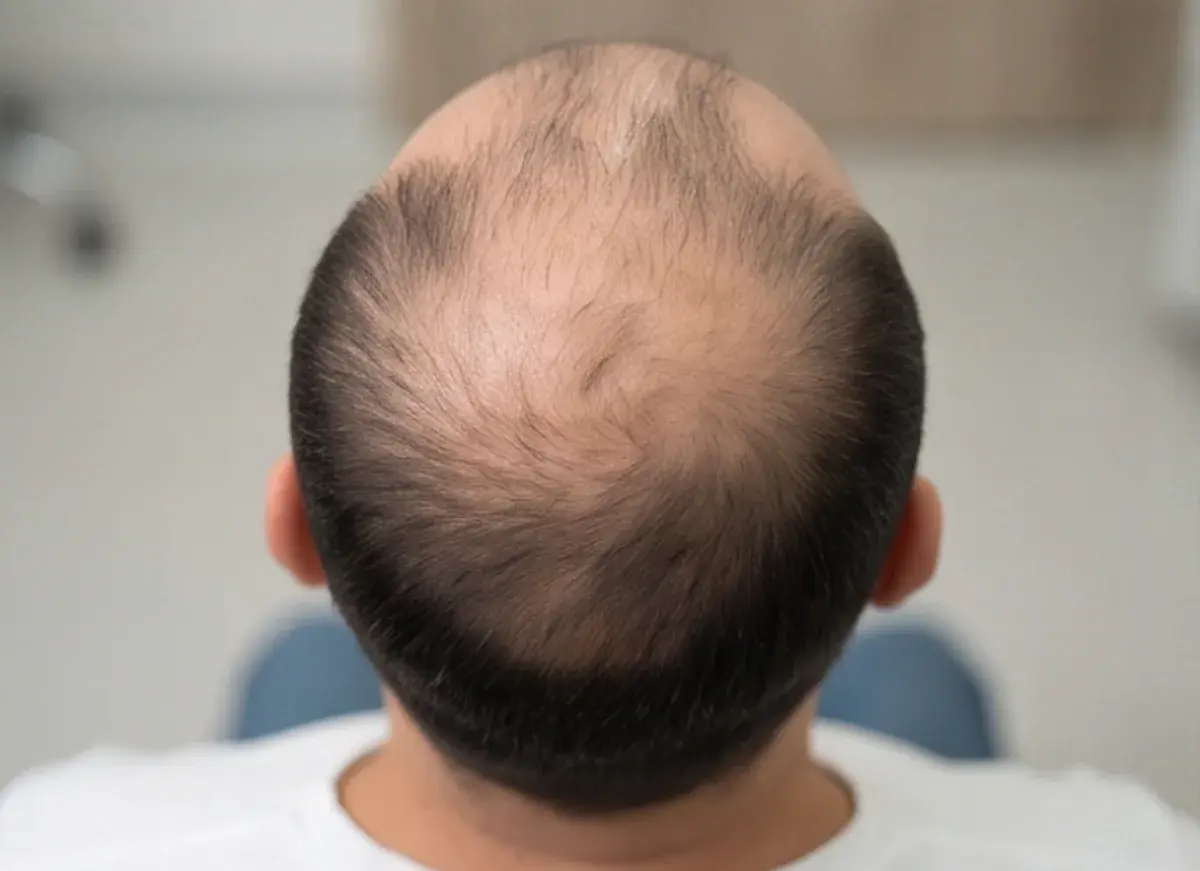
In most cases hereditary hair loss is behind it. The hair roots at the temples and forehead are sensitive to the hormone DHT: the hair gets thinner and the growth phase shorter until the root no longer forms visible hair. The hair at the back of the head, by contrast, is largely insensitive – which is exactly why it is suitable for transplantation.
Normal hairline or receding temples?
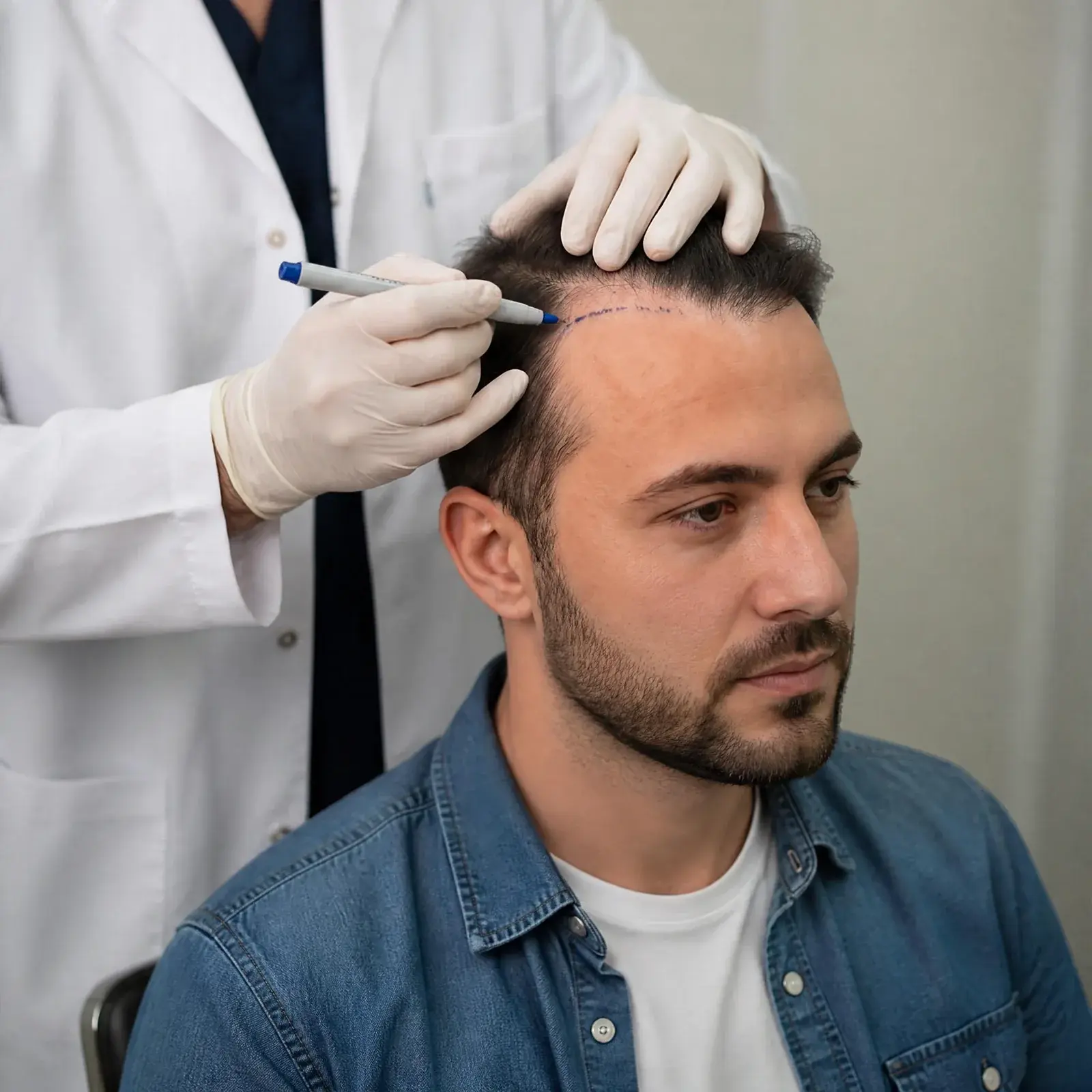
In their early twenties almost all men’s youthful hairline changes somewhat and matures. One speaks of receding temples when the temples recede clearly and an M-shaped hairline develops. On the Norwood scale this usually corresponds to stage 2 to 3.
What helps against a receding hairline?
| Option | What it does |
|---|---|
| Hair loss treatment | Can slow hair loss and strengthen existing hair – hair already lost usually does not come back. |
| PRP | Supports the hair roots with growth factors from your own blood. |
| Mesotherapy | Delivers active ingredients directly into the scalp. |
| Hair transplant (DHI) | Fills the temples permanently with your own hair and shapes a natural hairline. |
Hair transplant for receding temples
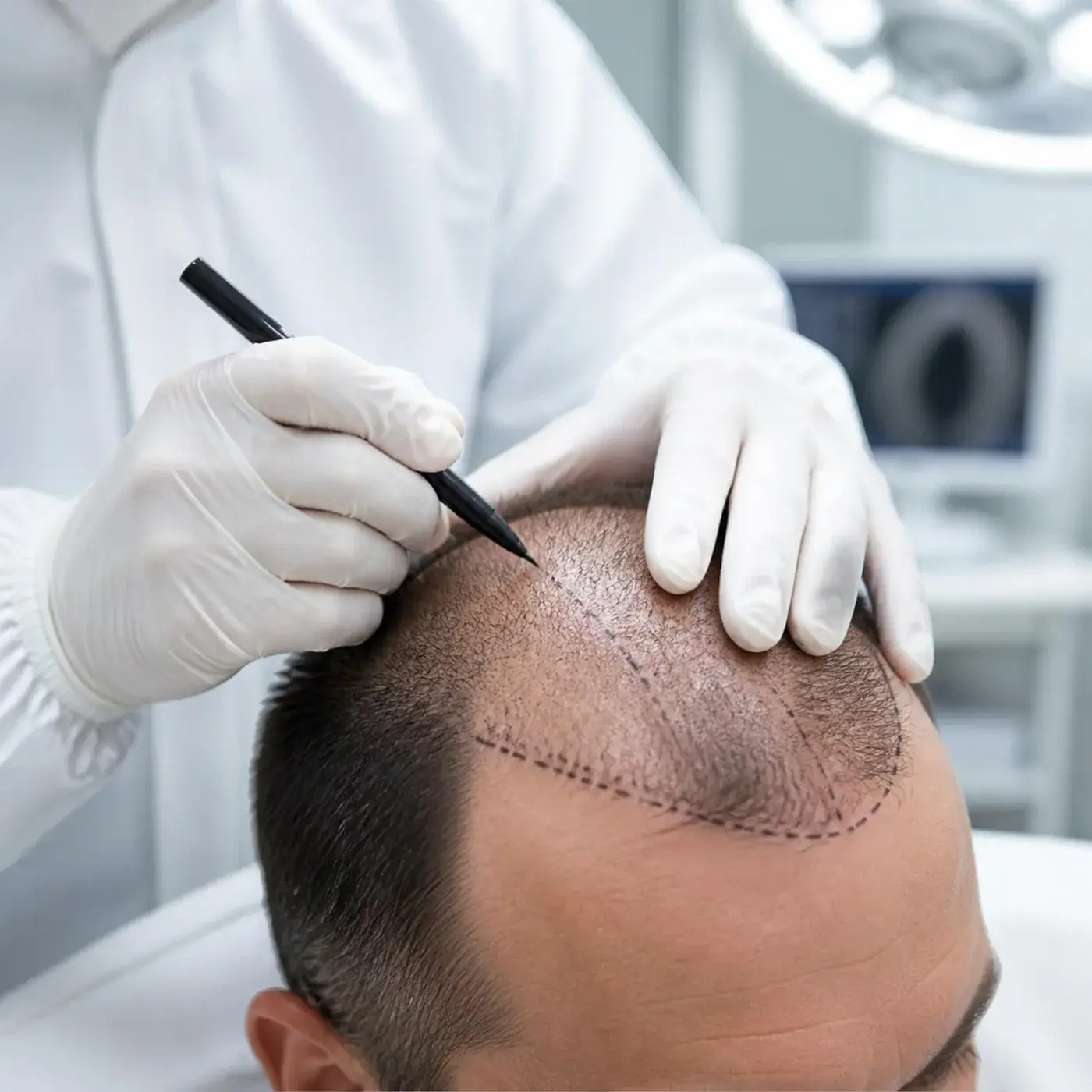
The DHI method with the Choi Pen is especially suited to receding temples: each graft is placed individually at a natural angle, even between existing hair. Single-hair grafts are used for the front line so that the hairline looks soft and natural. If you do not want anyone to notice, you can be treated with Long DHI without shaving.
Depending on severity, usually about 1,000 to 2,800 grafts are needed.
What matters for the hairline
- A hairline that suits your age – not too low, not too straight.
- Slightly irregular transitions instead of a hard edge.
- The natural forward growth angle.
- Reserve in the donor area in case hair loss progresses later.
The next step
Send us four photos. Our head surgeon assesses your temples, suggests a suitable hairline and gives you graft count and fixed price.