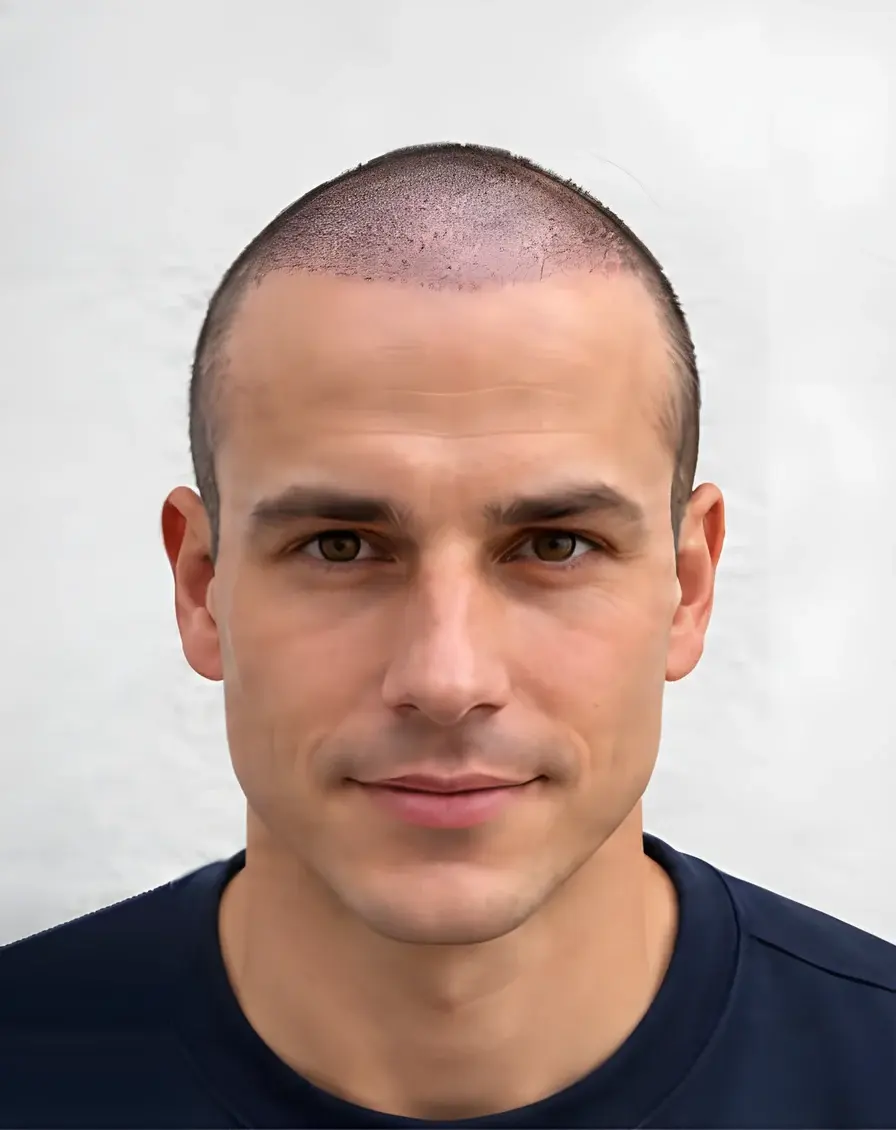


What is shedding?
Shedding is the loss of the transplanted hair shafts about two to eight weeks after the hair transplant. Extraction and placement send the root temporarily into a resting phase, and it sheds the old hair. The root itself stays in the skin and starts forming a new hair after a few months.
Shedding and shock loss: the difference
Shedding concerns the transplanted hair. Shock loss, by contrast, is the temporary loss of your own, non-transplanted hair around the recipient area. In most cases this hair also grows back within a few months.
Timeline
| When | What happens |
|---|---|
| Week 2–3 | Shedding begins, the hairs come away easily. |
| Week 4–8 | Most of the transplanted hair has fallen out. |
| Month 2–3 | “Ugly duckling” phase: you look roughly as you did before. |
| from month 3 | New, fine hair begins to grow. |
What you can do in this phase
- Stay calm: shedding is not a sign that the grafts have not taken.
- Keep following the care instructions and medication as discussed.
- Do not pull, scratch or rub the hair hard.
- Do not smoke and eat a balanced diet.
- A PRP treatment can support regrowth – ask us about it.
When you should get in touch
Simply send your coordinator photos via WhatsApp – our head surgeon will take a look.
- Severe redness, pain or pus in the recipient or donor area.
- Fever in the first days after the procedure.
- If hardly any new hair is visible after six months.